7 Business Automation Services That Save Small Businesses 10+ Hours a Week
The eBroadway AI Team
AI Growth and Automation Agency, Australia

Business automation services help small businesses eliminate repetitive manual tasks so owners and staff can focus on work that actually grows revenue. The right combination of automation tools can save a typical small business 10 to 20 hours per week, reduce costly human errors, and let a team of 3 operate like a team of 10.
This guide covers the 7 most impactful business automation services available to Australian small businesses in 2026, what each one does, and how to know if it is right for you.
In this article
| Automation Service | Hours Saved/Week | Difficulty | Best For |
|---|---|---|---|
| AI Chat Agent | 3 to 5 hrs | Low | Lead capture, FAQs |
| Email/SMS Automation | 2 to 4 hrs | Low | Follow-up, nurturing |
| Automated Invoicing | 2 to 3 hrs | Low | Service businesses |
| Social Scheduling | 1 to 2 hrs | Very low | Any business |
| CRM Automation | 2 to 4 hrs | Medium | Sales teams |
| Automated Reporting | 1 to 2 hrs | Low | All businesses |
| AI Voice Agent | 3 to 6 hrs | Medium | High inbound call volume |
1. How Does an AI Chat Agent Save Time for Small Businesses?
An AI chat agent sits on your website and answers visitor questions 24 hours a day, 7 days a week, without you lifting a finger. It can qualify leads, book appointments, and collect contact details while you sleep.
For a typical small business receiving 20 to 40 website inquiries per week, an AI chat agent eliminates 3 to 5 hours of manual response time. More importantly, it responds instantly rather than the next business day, which dramatically increases the chances a lead converts.
- + Answers common questions instantly (pricing, hours, services)
- + Captures name, email, and phone before handing off to staff
- + Books consultation calls directly into your calendar
- + Escalates complex queries to a human via email or SMS

eBroadway AI Service
AI Automation for Small Business
Custom AI chat agents, SMS automation, and voice agents built for Australian small businesses. No lock-in contracts.
Explore AI Automation →2. What Is Automated Email and SMS Follow-Up, and Why Does It Matter?
Most small businesses lose potential customers not because the customer was not interested, but because no one followed up. Studies show that 80% of sales require at least 5 follow-up touchpoints, yet the average salesperson makes only 2 attempts.
Automated email and SMS sequences solve this by sending perfectly timed follow-ups without human effort. A new lead submits a form and within seconds they receive a personalised email, then an SMS 24 hours later, then a follow-up email at day 3, day 7, and day 14. This process runs itself for every single lead, every time.
For service-based businesses such as trades, clinics, real estate agents, and consultants, this automation alone typically saves 2 to 4 hours per week and increases lead conversion rates by 20 to 35%.
3. How Does Automated Invoicing Save Money for Small Businesses?
Manual invoicing is one of the biggest time drains in small business. Creating invoices, chasing late payments, reconciling accounts, and sending reminders can consume hours every week. Automated invoicing removes most of this friction.

Tools like Xero, MYOB, and Stripe integrate with your business systems to automatically generate and send invoices when a job is completed, send payment reminders at 7, 14, and 30 days overdue, reconcile payments as they arrive, and produce monthly financial reports without manual input.
For an Australian small business handling 20 to 50 invoices per month, this typically saves 2 to 3 hours per week and reduces late payments by up to 40%.
4. Is Social Media Scheduling Worth It for a Small Business?
Yes, and it is one of the easiest automations to implement. Social media scheduling tools like Buffer, Later, or Meta Business Suite let you batch-create a full month of posts in a single 2-hour session, then schedule them to publish automatically throughout the month.
Instead of scrambling to post something every day (or simply not posting at all), you invest a couple of hours once and maintain a consistent presence across Instagram, Facebook, LinkedIn, and Google Business Profile automatically.
5. What Does CRM Automation Do for a Small Business Sales Team?
A Customer Relationship Management (CRM) system with automation tracks every lead, deal, and client interaction without manual data entry. When someone fills in your contact form, the CRM automatically creates a contact record, assigns it to a team member, and triggers the follow-up sequence.
Popular CRM platforms for Australian small businesses include HubSpot (free tier available), Zoho CRM, and Pipedrive. Each integrates with email, SMS, and your website to create a fully automated sales pipeline.
6. How Can Automated Reporting Help Small Business Owners Make Better Decisions?
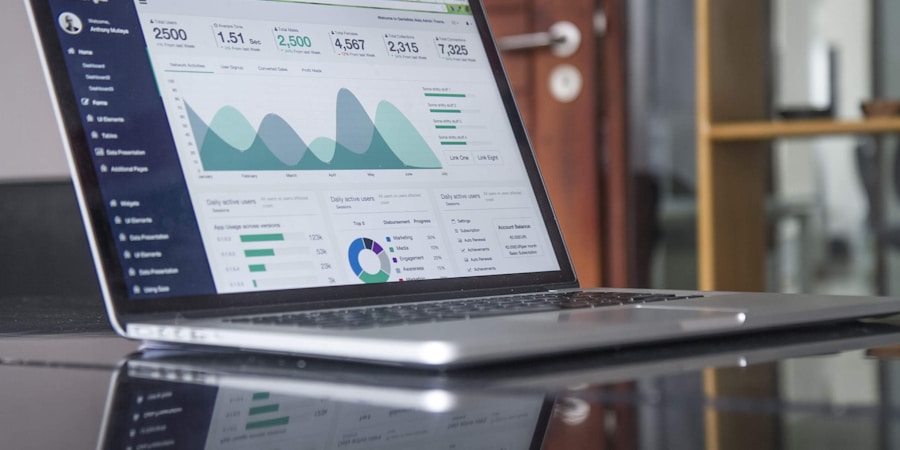
Most small business owners make decisions based on gut feel because pulling together accurate data takes too long. Automated reporting fixes this by connecting your key systems (sales, website traffic, ad spend, revenue) into a single dashboard that updates in real time.
Tools like Google Looker Studio (free), Databox, or custom dashboards built with your CRM give you a live view of revenue, leads, website traffic, and ad performance every morning without any manual work.
Better data means faster, more confident decisions and less time spent in spreadsheets.
7. Can an AI Voice Agent Actually Answer Calls for My Business?
Yes. AI voice agents are one of the fastest-growing business automation services in 2026. A voice agent answers your business phone number, greets callers by name, asks qualifying questions, captures their details, and either books an appointment or escalates to a human for complex requests.
Every call is recorded, transcribed, and emailed to you as a summary within minutes. For businesses receiving 10 to 30 inbound calls per day, an AI voice agent can save 3 to 6 hours of staff time weekly while ensuring no call goes unanswered, even outside business hours.

Where Should a Small Business Start with Automation?
Start with the automation that addresses your biggest pain point. Use this simple framework:
- 1List your 3 most time-consuming repetitive tasks each week.
- 2Identify which of the 7 automation services above would eliminate or reduce each task.
- 3Start with the easiest win first — usually email follow-up automation or social scheduling.
- 4Add one automation per month rather than trying to implement everything at once.
Free Consultation
Not Sure Where to Start? We Will Map It Out for You.
Our team audits your business, identifies your top 3 automation opportunities, and builds a no-fluff implementation plan — all in a free 30-minute call.
Book a Free Automation Audit →Frequently Asked Questions
How much do business automation services cost for a small business?
Costs vary widely. Basic automations like email sequences and social scheduling can start at $20 to $100 per month using off-the-shelf tools. Custom AI automation built specifically for your business typically starts at $1,500 to $5,000 as a one-time setup, with low ongoing costs. Most small businesses recover the investment within 2 to 4 months from time savings alone.
Do I need technical skills to use business automation tools?
Not for most modern tools. Platforms like Zapier, Make (formerly Integromat), HubSpot, and Xero are designed for non-technical users with drag-and-drop interfaces. For more advanced custom automation like AI chat agents, voice agents, or fully integrated workflows, working with an automation agency is usually faster and more reliable than DIY.
What business processes are best suited to automation?
Any task that is repetitive, rule-based, and does not require human judgement is a strong candidate. Common examples include sending follow-up emails, posting on social media, creating invoices, routing customer inquiries, updating CRM records, generating weekly reports, and answering common customer questions.
How long does it take to set up business automation?
Simple automations like email sequences or social scheduling can be live within a day. More complex setups like a custom AI chat agent or integrated CRM automation typically take 1 to 3 weeks depending on the complexity of your systems and the agency you work with.
Is business automation suitable for very small businesses with 1 to 5 employees?
Yes, and small businesses often benefit the most. When you have a small team, every hour saved from repetitive admin has a larger proportional impact. A 1-person business using automation effectively can handle the client volume of a 3 to 4 person team.
eBroadway AI
Ready to Reclaim 10+ Hours a Week?
We help Australian small businesses implement the right automation services so you can stop doing admin and start growing.